Approach to Weight Loss
Approach diagram
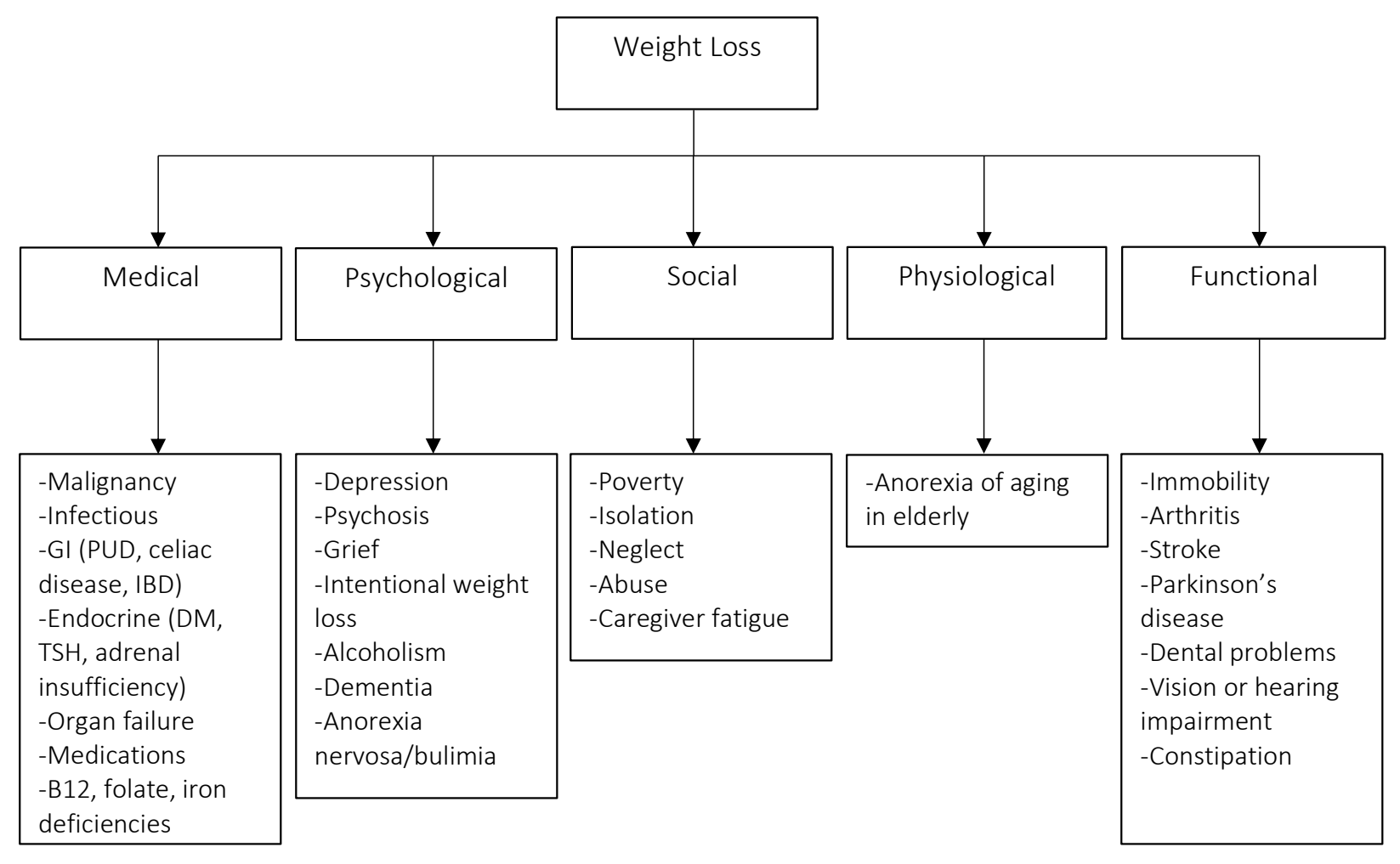
Diagram in text
- Medical: malignancy; infectious; GI (PUD, celiac disease, IBD); endocrine (DM, TSH, adrenal insufficiency); organ failure; medications; B12, folate, iron deficiencies.
- Psychological: depression; psychosis; grief; intentional weight loss; alcoholism; dementia; anorexia nervosa/bulimia.
- Social: poverty; isolation; neglect; abuse; caregiver fatigue.
- Physiological: anorexia of aging in elderly.
- Functional: immobility; arthritis; stroke; Parkinson’s disease; dental problems; vision or hearing impairment; constipation.
Definitions
- Clinically significant weight loss: loss of >5% of body weight over 6-12 months
Symptoms
- Pattern of weight loss: recent, progressive → more concerning
- Screen for eating disorders, intentional weight loss/ dieting, and malnutrition
- Malabsorption/nutritional deficiencies: Steatorrhea, pale stool, diarrhea → fat malabsorption. Anemia, paresthesia → B12 deficiency. Anemia, pagophagia → iron deficiency.
- Review of systems
- Functional factors: dysphagia, poor dentition, poor cognition
- PMHx: Recent/chronic illness, Medications/substances that can causes anorexia, dry mouth, altered taste/smell, nausea/vomiting , Social Hx: impaired ADLs and IADLs, financial situation, living situation (e.g., living alone)
Signs
- Weigh the pt: BMI <23.5 in males and <22 in females is concerning
- Inspection: temporal wasting, muscle wasting, triceps skin fold
- Examine for nutritional deficiencies: Increased bruising → vitamin K deficiency; Glossitis → iron deficiency; Ataxia, loss of vibration sense/proprioception → B12 deficiency; Edema, muscle atrophy → protein deficiency; Cheilosis, painless glossitis, acrodermatitis, angular stomatitis → vitamin B deficiency
- Cognitive and neurological exam: dementia screen
- Full examination looking for underlying diseases process to explain weight loss
Investigations
| Symptoms | Dx | Investigations |
|---|---|---|
| Fever, fatigue | Infection, autoimmune, malignancy, diabetes, thyroid disease | CBC, ESR, CRP, glucose, TSH, LFTs, urinalysis, age-appropriate cancer screening, CXR, abdominal U/S |
| Dysphagia, oral problems | Ill-fitting dentures, dental caries/abscess, periodontal disease, esophageal stricture/webs | Visual exam, swallowing study, endoscopy |
| Dyspnea, exertional fatigue | CHF, pulmonary infection, emphysema, COPD | CBC, CXR, ECG, basic metabolic panel |
| Indigestion, abdominal pain, change in stool pattern, early satiety | GI malignancy, PUD, dyspepsia, GERD, cholecystitis | CBC, ESR, CRP, FOBT, LFTs (albumin, INR, bilirubin), abdominal U/S, endoscopy, colonoscopy |
Management
- Multidisciplinary team: dentists, dieticians, speech/ occupational/ speech therapists, social workers
- Dietary changes: minimize dietary restrictions, eat high-calorie foods, softer food consistency (if chewing/swallowing problem)
- Environmental changes: eat in company or with assistance (hand-feeding pt)
- Nutritional supplements (e.g., Ensure, Glucerna): provide extra calories but should not replace meals
- Flavor enhancers (e.g., bacon, ham flavours): maximize taste and smell
- Appetite stimulants: Megestrol acetate → improves appetite and increases weight gain in patients with cancer
- If depression + weight loss → consider Mirtazapine (NaSSA)
- If idiopathic (i.e., cannot identify underlying cause) → watchful waiting for 1-6 mo (shorter interval if progressive weight loss). On follow-up, consider diet, psychosocial causes, drug use, occult illness
References
Original Oncology reference list. The source provides references for the specialty as a whole.