Approach to Hyponatremia
Source transcription
The diagram's urine indices and the management wording are retained as printed. This is a transcription of the 2020 resource, not a clinical update.
Approach diagram
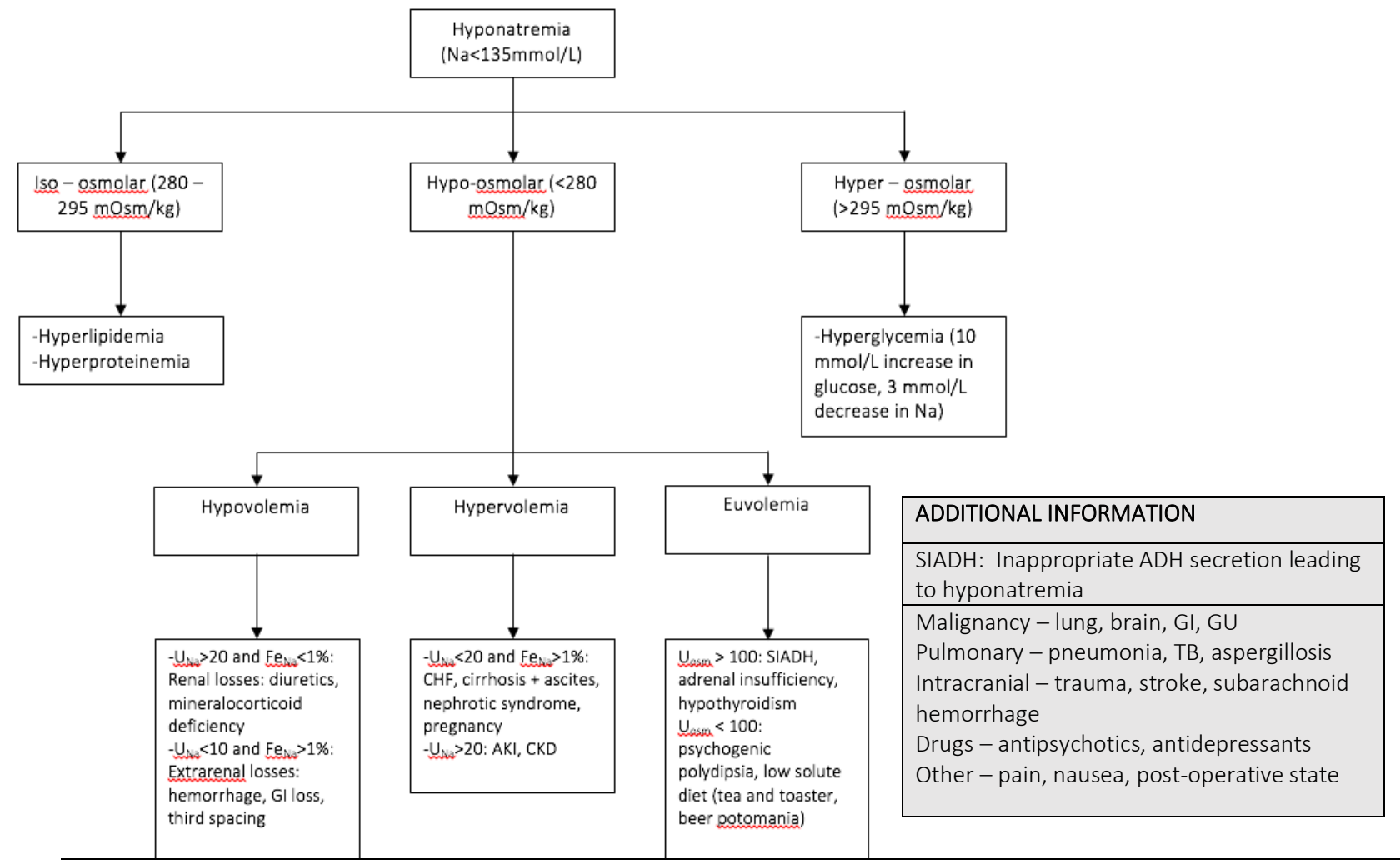
Diagram in text
Hyponatremia (Na <135 mmol/L)
- Iso-osmolar (280–295 mOsm/kg)
- Hyperlipidemia
- Hyperproteinemia
- Hypo-osmolar (<280 mOsm/kg)
- Hypovolemia
- UNa >20 and FeNa <1%: Renal losses: diuretics, mineralocorticoid deficiency
- UNa <10 and FeNa >1%: Extrarenal losses: hemorrhage, GI loss, third spacing
- Hypervolemia
- UNa <20 and FeNa >1%: CHF, cirrhosis + ascites, nephrotic syndrome, pregnancy
- UNa >20: AKI, CKD
- Euvolemia
- Uosm >100: SIADH, adrenal insufficiency, hypothyroidism
- Uosm <100: psychogenic polydipsia, low solute diet (tea and toaster, beer potomania)
- Hyper-osmolar (>295 mOsm/kg)
- Hyperglycemia (10 mmol/L increase in glucose, 3 mmol/L decrease in Na)
Hyponatremia
- Excess water relative to Na. Almost always due to high ADH.
Symptoms
- Acute hyponatremia (24h–48h) likely to be symptomatic. Chronic (>24h–48h) more likely to be asymptomatic.
- Neurological symptoms → headache, nausea, malaise, lethargy, weakness, muscle cramps, anorexia, somnolence, personality changes
- Complications → seizure, coma, respiratory arrest, brain damage, brain herniation, death
Management
- Depends on volume status, acuity and symptoms
- If acute symptomatic, rapid correction of Na - 2 mEq/L/h with hypertonic saline for the first 2–3h until symptoms resolve
- If chronic symptomatic, correct Na by no more than 0.5 mEq/L/h and no more than 8 mEq/24 hr
- If severe (Na <120) and neurological symptoms can administer 3% NaCl and dDAVP to prevent overcorrection
- Rate of Na correction should NOT exceed 8 mEq/L/24 hours due to risk of irreversible osmotic demyelination syndrome
- Hypovolemic hyponatremia → volume repletion with NS at a slow rate
- SIADH → free water restriction and treat underlying cause → salt tablets → consider hypertonic saline if symptoms fail to resolve or Na fails to increase with water restriction
- Hypervolemic hyponatremia → free water restriction
Additional Information
SIADH: Inappropriate ADH secretion leading to hyponatremia
- Malignancy - lung, brain, GI, GU
- Pulmonary - pneumonia, TB, aspergillosis
- Intracranial - trauma, stroke, subarachnoid hemorrhage
- Drugs - antipsychotics, antidepressants
- Other - pain, nausea, post-operative state
References
Original Nephrology reference list. The source provides references for the specialty as a whole.