Approach to Hypercalcemia
Approach diagram
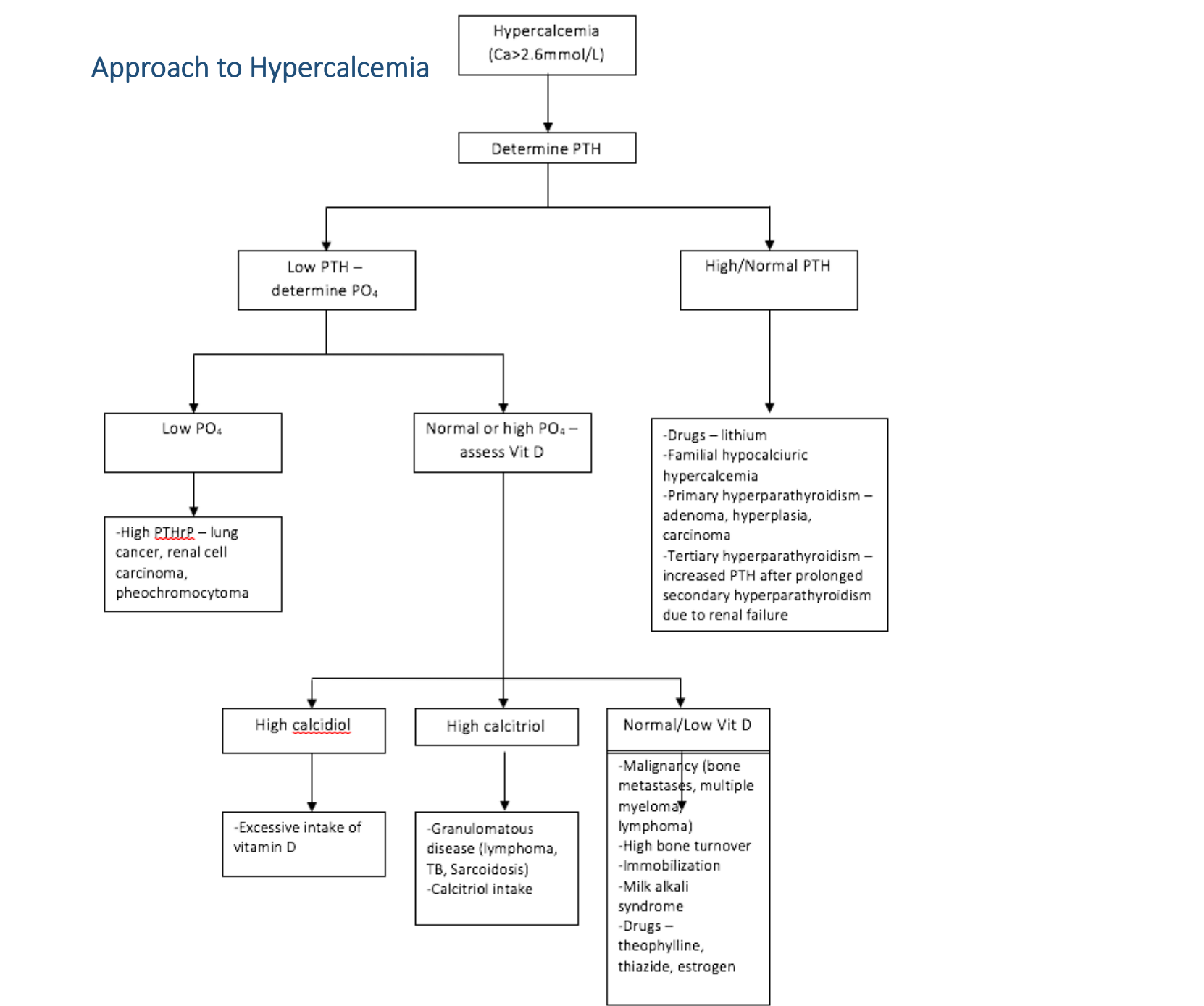
Diagram in text
Hypercalcemia (Ca >2.6 mmol/L) → determine PTH
- Low PTH → determine PO₄
- Low PO₄ → high PTHrP: lung cancer, renal cell carcinoma, pheochromocytoma.
- Normal or high PO₄ → assess vitamin D:
- High calcidiol → excessive intake of vitamin D.
- High calcitriol → granulomatous disease (lymphoma, TB, sarcoidosis); calcitriol intake.
- Normal/low vitamin D → malignancy (bone metastases, multiple myeloma, lymphoma); high bone turnover; immobilization; milk alkali syndrome; drugs — theophylline, thiazide, estrogen.
- High/normal PTH
- Drugs — lithium.
- Familial hypocalciuric hypercalcemia.
- Primary hyperparathyroidism — adenoma, hyperplasia, carcinoma.
- Tertiary hyperparathyroidism — increased PTH after prolonged secondary hyperparathyroidism due to renal failure.
Symptoms
- “Bones, stones, groans and psychiatric overtones”
- MSK → weakness, bone pain
- Renal → nephrolithiasis, polyuria, polydipsia
- Groans → abdominal pain, vomiting, nausea, constipation, pancreatitis
- Psychiatric → psychosis, anxiety, depression
- Neurologic → Hypotonia, hyporeflexia, myopathy, paresis
Management
- IV NS +/- furosemide to increase renal excretion
- Calcitonin – onset in hours but develop tachyphylaxis
- Bisphosphonates – onset 1-2 days, inhibits osteoclasts
- Glucocorticoids – if malignancy, vitamin D intoxication, granulomatous disease
- Denosumab – for malignancy related
- Hemodialysis – if resistant to other treatment
References
Original Nephrology reference list. The source provides references for the specialty as a whole.