Approach to Lymphadenopathy
Approach diagram
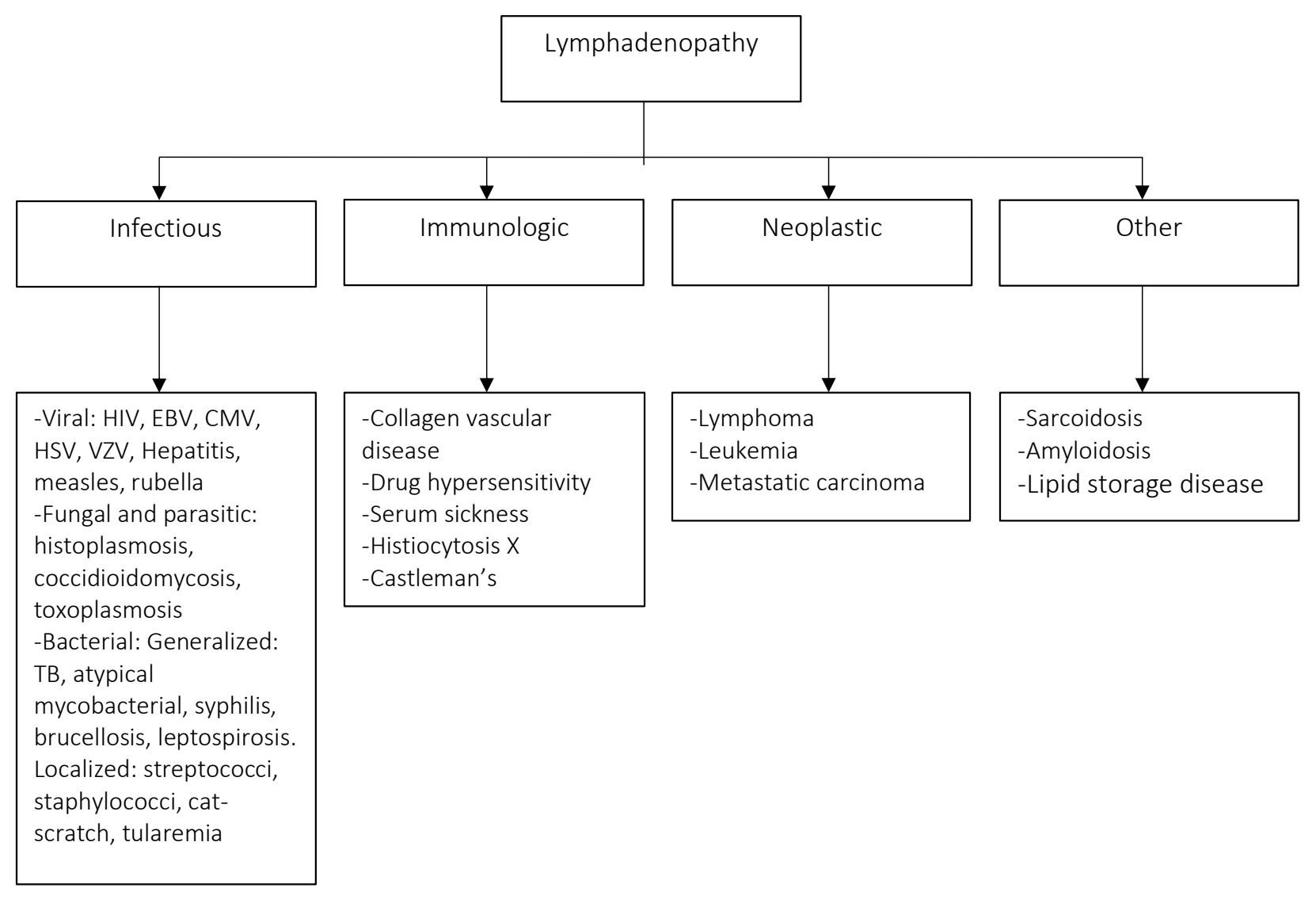
Diagram in text
- Infectious
- Viral: HIV, EBV, CMV, HSV, VZV, hepatitis, measles, rubella.
- Fungal and parasitic: histoplasmosis, coccidioidomycosis, toxoplasmosis.
- Bacterial: generalized — TB, atypical mycobacterial, syphilis, brucellosis, leptospirosis; localized — streptococci, staphylococci, cat-scratch, tularemia.
- Immunologic: collagen vascular disease; drug hypersensitivity; serum sickness; histiocytosis X; Castleman’s.
- Neoplastic: lymphoma; leukemia; metastatic carcinoma.
- Other: sarcoidosis; amyloidosis; lipid storage disease.
Symptoms
- Localized infectious symptoms: URTI, cellulitis
- Constitutional symptoms: malignancies, TB
- Timing: acute vs chronic
- Exposures: cats, ticks, HIV, travel history, sexual history
- Joint pain and swelling, rashes → connective tissue disorder
- Pruritis → Hodgkin lymphoma
- Meds → serum sickness
- Allopurinol, Captopril, Carbamazepine, Hydralazine, Penicillin, Sulfonamides
Signs
- Determine localized vs generalized
- Localized = reactive (Ex: cellulitis) or neoplastic
- Cervical
- Right supraclavicular
- Left supraclavicular
- Axillary
- Epitrochlear
- Inguinal
- Check for splenomegaly
Investigations
- CBC, blood film
- Localized:
- No symptoms suggesting malignancy → observe for 3-4wk, if no resolution by then → excisional biopsy
- US
- Generalized:
- ANA, ESR
- LFTs
- SPEP
- EBV, CMV, HIV serologies
- VDRL test
- TB tests
- CXR, +/- CT thorax and abdomen
- Biopsy – excisional if suspected lymphoma
References
Original Oncology reference list. The source provides references for the specialty as a whole.