Atrial Fibrillation
Definition
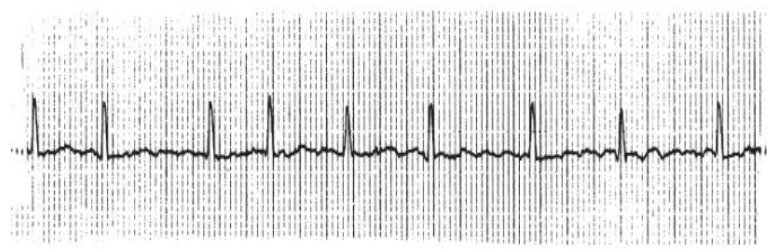
- Irregular rhythm characterized by a fast atrial rate such that P waves are not discernible on ECG
- Afib leads to blood stasis in the atrium which promotes clot formation and increases risk for stroke/TIA. It can also decrease cardiac output precipitating heart failure.
Classification
- Paroxysmal: atrial fibrillation episode terminates spontaneously
- Permanent/chronic: continuous atrial fibrillation unresponsive to cardioversion
- Persistent: atrial fibrillation sustained for 7 days or only terminates with cardioversion
- Lone: atrial fibrillation in individuals <60yo, with no structural heart disease or risk factors
Etiology
- Cardiovascular: HTN, CAD, cardiomyopathy, myocarditis, infiltration (amyloid, sarcoid), valve disease, arrhythmia, pericarditis, surgery
- Pulmonary: COPD, pulmonary embolism, pleural effusion
- Metabolic: obesity, thyrotoxicosis
- Drugs: theophylline, adenosine, digitalis, beta agonists, alcohol
- Idiopathic
Symptoms
- Palpitations, chest pain, dyspnea, dizziness, syncope
- Past medical history → AF, SVT, WPW, CAD, HF, hypertension, diabetes, stroke, TIA, thyroid dysfunction
- DVT/PE risk factors
Signs
- Heart rate → tachycardia, rhythm → irregularly irregular
- Hypotension if unstable
- Complications of afib → signs of CHF exacerbation or stroke/TIA
Investigations
- ECG: no organized P waves and chaotic fibrillatory baseline, rate irregularly irregular with narrow QRS
- Bloodwork: K, Mg, thyroid function tests
- CXR, echocardiogram
Management
Stroke risk stratification - CHA₂DS₂-VASc
Source table labels retained
The source heading says “CHA₂DS₂-VASc” but labels its score column “CHADS₂.” These labels and all values are preserved below. The risk-factor list and score/risk list are separated to avoid implying that each risk factor corresponds to the score printed beside it. No score-zero row is supplied in the source.
Risk factors and points
| Risk Factor | Points |
|---|---|
| Congestive heart failure | 1 |
| Hypertension | 1 |
| Age >75 | 2 |
| Diabetes | 1 |
| Prior stroke/TIA | 2 |
| Vascular Disease | 1 |
| Age 65–74 | 1 |
| Female | 1 |
Score and stroke risk (source column label)
| CHADS₂ | Stroke Risk (%/Yr) |
|---|---|
| 1 | 1.3 |
| 2 | 2.2 |
| 3 | 3.2 |
| 4 | 4 |
| 5 | 6.7 |
| 6 | 9.8 |
| 7 | 9.6 |
| 8 | 6.7 |
| 9 | 15.2 |
Treatment
- Rate control: B-blocker, diltiazem, verapamil
- Anticoagulation
- Age <65 and CHADS₂ 0 → ASA 81 mg
- Age >65 and CHADS₂ ≥1 → NOACs (ex. Apixaban, dabigatran, rivaroxaban) or warfarin
- Cardioversion
- Unstable patients (hypotension, angina, uncontrolled heart failure) cardiovert STAT
- Afib <24–48h can cardiovert without anticoagulation
- Afib >24–48h anticoagulation required 3 weeks prior and 4 weeks after cardioversion
- Antiarrhythmic drugs
- Initiate if bothersome symptoms or episodes of prolonged afib in which symptoms do not resolve with rate control
- Propafenone, flecainide → patients with no or minimal heart disease
- Amiodarone → patients with LV dysfunction or CAD
Additional Information - Pharmacology of Antiarrhythmic Medications
Class IA
- Moderate block (↓↓ phase 0 upstroke rate; prolonged action potential)
- e.g. Quinidine, Procainamide, Disopyramide
Class IB
- Mild block (↓ phase 0 upstroke rate; shortened action potential)
- e.g. Lidocaine, Mexiletine
Class IC
- Marked block (↓↓↓ phase 0 upstroke rate; no change in action potential)
- e.g. Flecainide, Propafenone
Class II
- β-adrenergic receptor blockade
- e.g. Propanolol, Esmolol, Metoprolol
Class III
- K⁺ channel blockade
- e.g. Amiodarone, Dronedarone, Sotalol, Ibutilide, Dofetilide
Class IV
- Ca⁺⁺ channel antagonists
- e.g. Verapamil, Diltiazem
Source note: The anticoagulation thresholds, cardioversion timing, drug spellings and classifications are retained from the May 2020 source; this conversion does not update treatment guidance.
Related notes and references
ECG Interpretation · Congestive Heart Failure · Approach to Syncope · Original Cardiology reference list