Approach to Chronic Diarrhea
Approach diagram
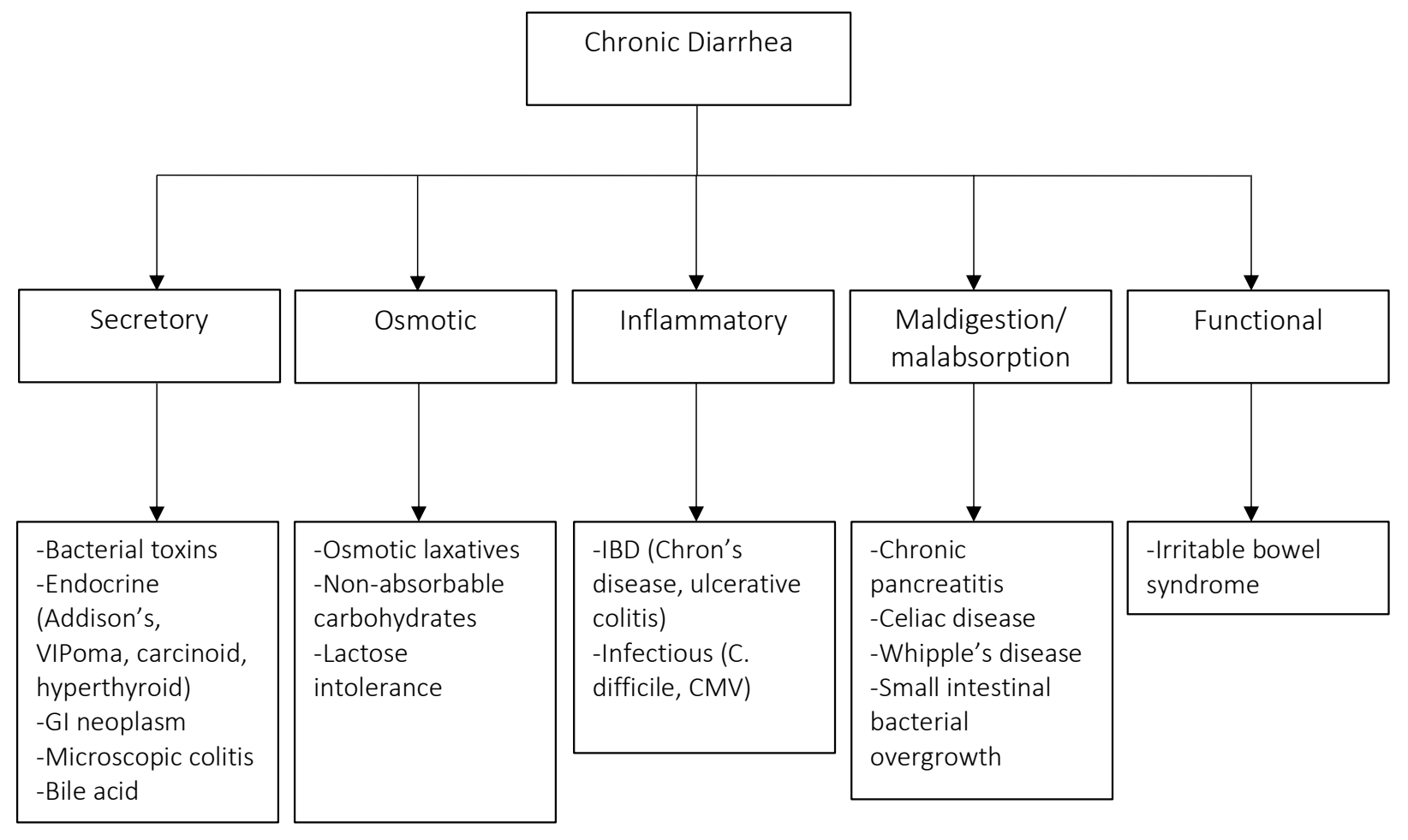
Diagram in text
- Secretory: bacterial toxins; endocrine (Addison’s, VIPoma, carcinoid, hyperthyroid); GI neoplasm; microscopic colitis; bile acid.
- Osmotic: osmotic laxatives; non-absorbable carbohydrates; lactose intolerance.
- Inflammatory: IBD (Chron’s disease, ulcerative colitis); infectious (C. difficile, CMV).
- Maldigestion/malabsorption: chronic pancreatitis; celiac disease; Whipple’s disease; small intestinal bacterial overgrowth.
- Functional: irritable bowel syndrome.
Definitions
- Acute diarrhea: passage of frequent unformed stool for <14 days duration
- Persistent diarrhea: 14-30 days
- Chronic diarrhea: >4 weeks
- Secretory diarrhea: secretion of anions or K into lumen or inhibition of Na absorption
- Osmotic diarrhea: ingestion of poorly absorbed ions or sugars
- Maldigestion/malabsorption: defective intraluminal hydrolysis of nutrients or defective mucosal absorption of nutrients
Symptoms
- Abnormally liquid/unformed stools of ↑ frequency
- Timing → relationship to meals, nocturnal diarrhea (suggests organic causes)
- Associated symptoms → abdominal pain, weight loss, prior surgery, chemotherapy or radiation
- Precipitating agents → PPI, colchicine, antibiotics, H2-receptor antagonists, SSRIs, ARBs, NSAIDs, chemotherapy, caffeine
- Secretory → watery, large volume, often nocturnal diarrhea, no abdominal pain, no fatty stool, no change in diarrhea w/ fasting
- Osmotic → watery, may be large or small volume, ↓ diarrhea w/ fasting or removal of offending agent
- Lactose intolerance → bloating, flatulence, abdominal discomfort, diarrhea
- Inflammatory → abdominal pain, blood in stool
- Maldigestion/ Malabsorption → fatty diarrhea (steatorrhea), ↓ diarrhea w/ fasting
- If celiac disease suspected assess for osteoporosis, dermatitis and herpetiformis
- IBS → watery diarrhea, chronic abdominal pain (relieved by defecation), mucus discharge, tenesmus, ↓ diarrhea w/ fasting
- NOT IBS: large volume diarrhea, bloody or greasy stools, significant weight loss, anemia
Signs
- Signs of hypovolemia → tachycardia, ↓ BP, ↓ urine output, axillary dryness, skin turgor
- General → signs of systemic disease, surgical scars, rectal tone/DRE
- Inflammatory → fever, abdominal tenderness
Investigations
General
- Bloodwork: CBC, electrolytes, ESR, albumin, TSH, iron studies, celiac serology (IgA anti-tTg Ab)
- Stool analysis: C. difficile toxin, culture and sensitivity, ova and parasites, fecal fat, WBC, lactoferrin, calprotectin, fecal occult blood test
- Abdominal x-ray to rule out overflow diarrhea
Etiology
- Maldigestion or Malabsorption → ⊕ Fecal fat
- Celiac disease → IgA anti-tTg Ab, IgA levels, may require upper endoscopy for duodenal biopsy to confirm diagnosis
- ⊕ Fecal occult blood, WBC, fecal lactoferrin, calprotectin → Inflammatory
- Stool osmotic gap = 290 – [2 x (Nastool + Kstool)]
- ≥100 → Osmotic
- <100 → Secretory or Functional
- Colonoscopy if unknown cause
- Abdominal CT/MRI if systemic problem suspected
Management
- General → Oral hydration, loperamide, bismuth subsalicylate
- Lactose intolerance → Lactose avoidance or lactase enzyme pill
- Pancreatic insufficiency → Pancreatic enzyme replacement
- Microscopic colitis → Antidiarrheals, cholestyramine, bismuth, budesonide
- Bile acid-induced diarrhea → cholestyramine (bile-acid binder)
- Celiac disease → Avoidance of gluten
- Whipple’s disease → Antibiotic therapy: Penicillin + Streptomycin or 3rd generation cephalosporin 10-14 days
- Small intestinal bacterial overgrowth → Rifaximin or metronidazole for 7-10 days
- IBS → exercise, CBT, change in diet, probiotics
References
Original Gastroenterology reference list. The source provides references for the specialty as a whole.