Approach to Hypernatremia
Approach diagram
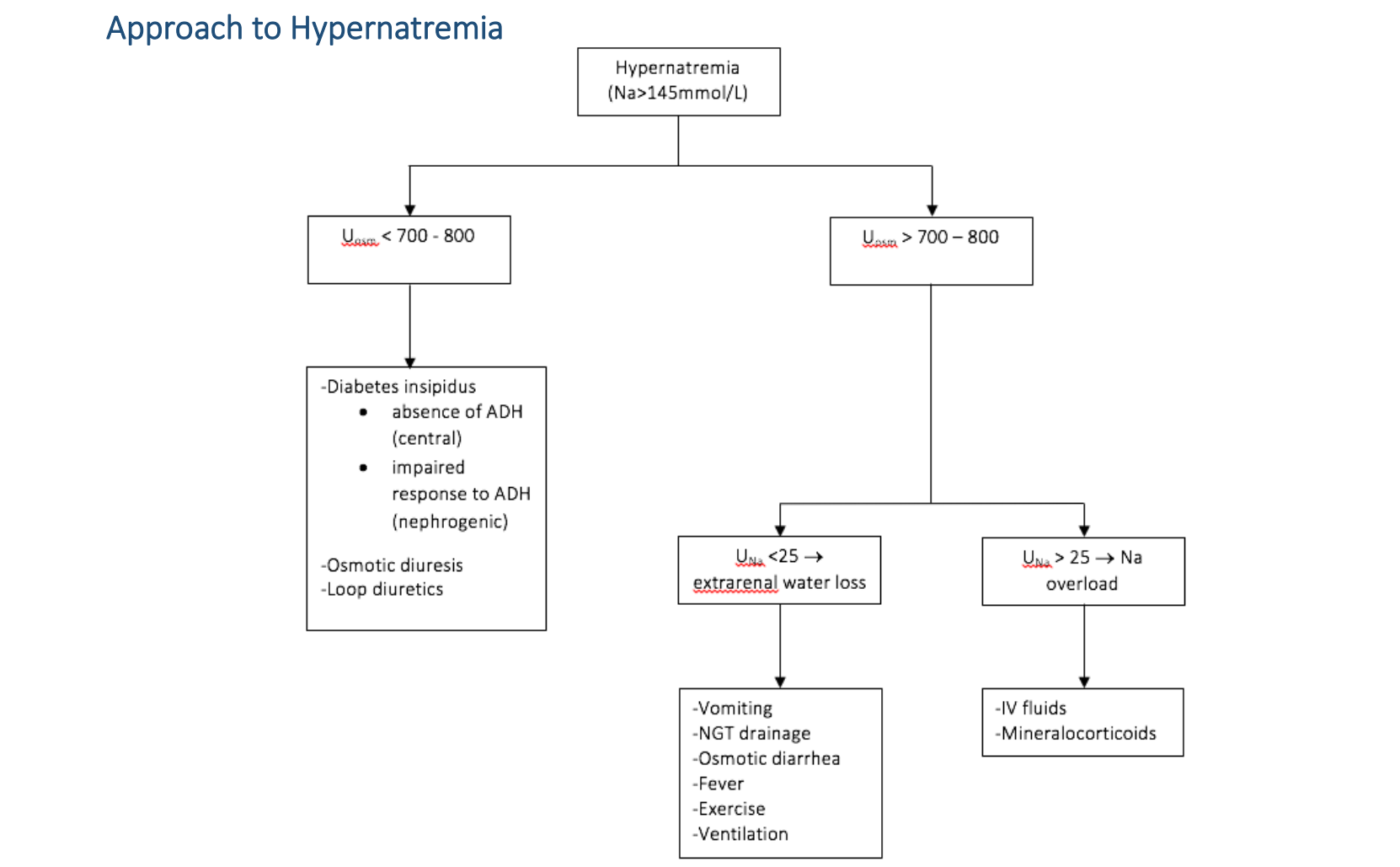
Diagram in text
Hypernatremia (Na >145 mmol/L)
- Uosm <700–800
- Diabetes insipidus: absence of ADH (central); impaired response to ADH (nephrogenic).
- Osmotic diuresis.
- Loop diuretics.
- Uosm >700–800
- UNa <25 → extrarenal water loss: vomiting, NGT drainage, osmotic diarrhea, fever, exercise, ventilation.
- UNa >25 → Na overload: IV fluids, mineralocorticoids.
Definition
- Free water deficit relative to total body Na, due to loss of hypotonic fluid AND impaired access to free water.
Symptoms
- Polyuria, thirst, confusion, decreased level of consciousness, coma
Management
- Restore access to water or replace free water deficit with D5W
- Rate of Na decrease should not exceed 0.5 mEq/L/h to avoid cerebral edema
- Central DI → dDAVP
- Nephrogenic DI → treat cause, Na restriction + thiazide diuretic
!!! info "Additional information — Diabetes insipidus" ### Diabetes insipidus
- Central DI – defect in central release of ADH
    - DDx: Neurosurgery, granulomatous disease, trauma, vascular events, malignancy
    - Diagnosed by Uosm < 300 which rises after administering DDAVP
- Nephrogenic DI – impaired renal response to ADH
    - Lithium, hypokalemia, hypercalcemia and congenital
    - Diagnosed when DDAVP fails to concentrate urine
References
Original Nephrology reference list. The source provides references for the specialty as a whole.